
Avoiding post-offer ghosting?
1 in 3 startups say it's their biggest challenge.

On an average, 50% of candidates drop out after accepting an offer. High candidate dropout rates is an uphill battle for many recruiters — and it affects your organisation more than you might think. Prevent the 'offer accepted, but never started' blues with the right Post-Offer Follow-Up strategies.
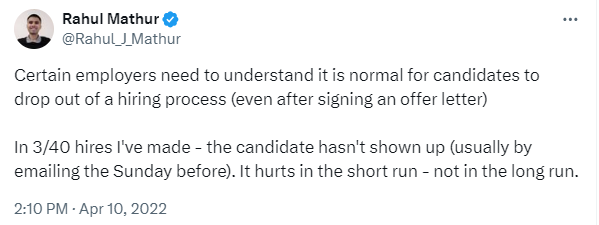
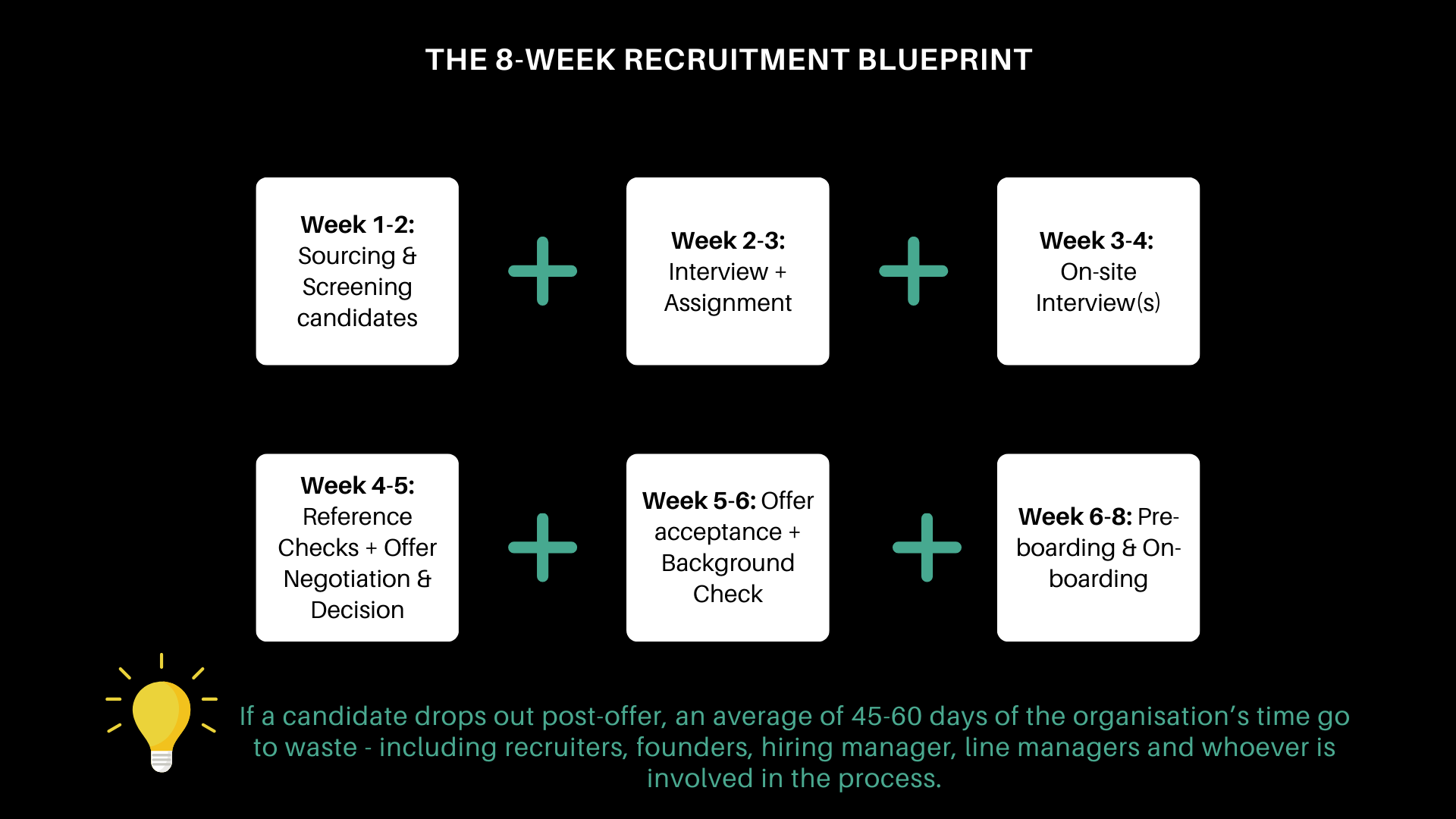
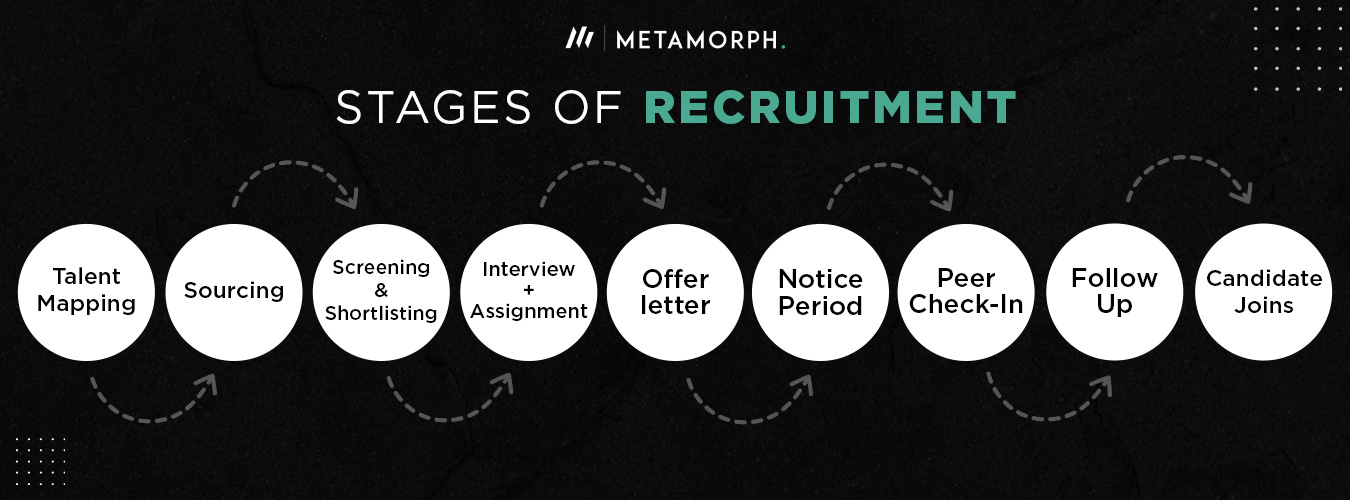
Candidates can drop out at any stage of the recruitment process, but all efforts — the recruiters’ time in sourcing, screening, and interviewing candidates — are equally in vain. To close a mid-level role, the recruitment process takes around 60 days, from the day of the client briefing to the day the candidate joins — and this is if you are lucky. The process might be delayed if there are multiple hiring managers, founders, core team members to go through.
Here is a general breakdown with possible timeframes:
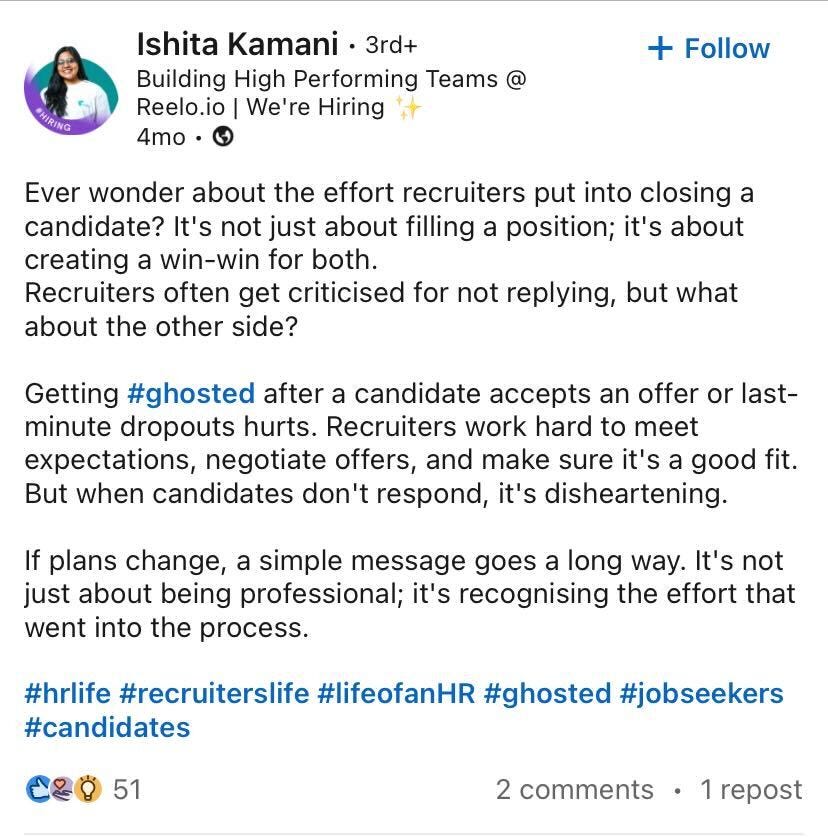
From the Recruiter’s Angle
Having worked with more than 220 startups in the last decade, in niche industries — our recruiters have had their fair share of dropouts. Hear straight from Ajay Rai, Principal Recruiter (Tech) at MetaMorph, sharing his thoughts.
‘Offer shopping’ has become a common practice; candidates compare multiple job offers to secure the best possible deal for themselves. Traditionally, employers respond to offer shopping by matching or surpassing competing offers, often through higher salary packages — but this can leave employers scrambling to retain top talent and frustrated by overinflated compensation packages.
In Ajay’s personal experience, some other reasons why a candidate could dropout, or even worse, ‘ghost’ you could be:
Better compensation
Counteroffer from their current employer
In today’s candidate-driven world, every other startup offers better compensation — but even a positive hiring experience might compel the candidate to choose you. This is where Post-Offer Follow-Up strategies come in.
A Well-Designed Post-Offer Follow-Up (POFU) Calendar makes all the difference.
A strategic POFU calendar goes beyond compensation, fostering genuine connections with your chosen candidate. It keeps them informed, engaged, and excited about joining your team.
Here's what a strong POFU calendar can do for you:
Reduce Offer Dropouts: By showcasing your company culture, growth opportunities, and team dynamics, you can combat offer shopping and ensure your top pick becomes a part of your team.
Boost Engagement: Consistent communication throughout the pre-onboarding phase keeps the candidate invested in the opportunity.
Improve New Hire Retention: A positive pre-boarding experience sets the tone for a successful and long-term employee relationship.
At MetaMorph, we have hired for 220+ startups and we understand the importance of a strategic POFU strategy. We can help you:
Craft a Personalised POFU Calendar: Tailored to your specific company culture and target demographics.
Streamline Execution: We'll guide you through the entire POFU process, ensuring a smooth pre-boarding experience.
Here's a glimpse into our high-performing POFU calendar, designed to address specific candidate segments:
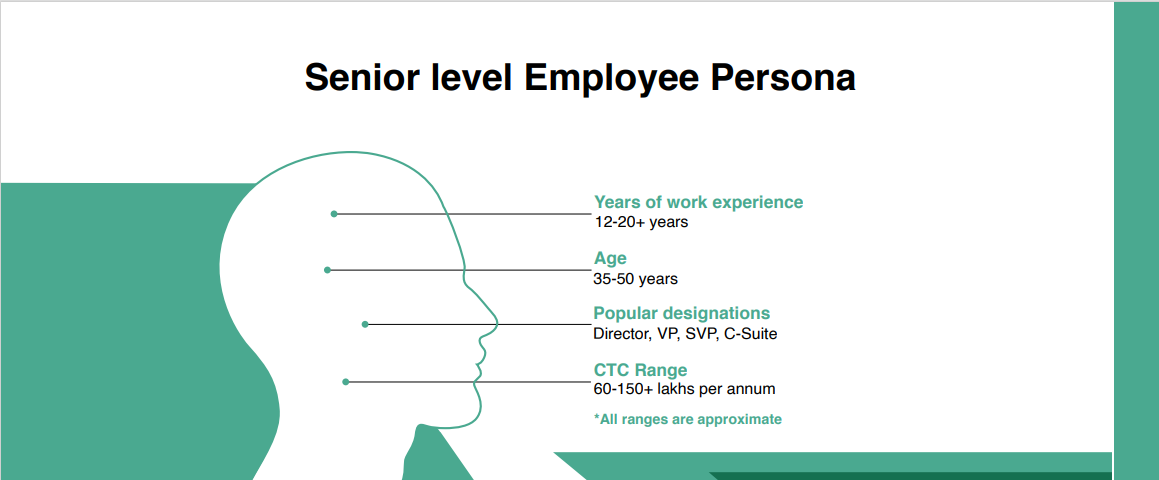
This is just a small snapshot of what our comprehensive POFU report offers!
Download our full report for FREE and gain access to:
Tailored POFU calendars for various candidate levels.
Actionable tips for crafting engaging content for pre-onboarding.
Expert advice on streamlining POFU execution for a seamless experience.
Curiosity Corner: Demystifying POFU with Vaibhav Parchure

Feeling lost in the POFU maze? In this exclusive AMA session, we took expert advice from Vaibhav Parchure, Partner at MetaMorph, to shed light on the intricacies of Post-Offer Follow-Up (POFU). Get ready to learn how to overcome common POFU challenges, leverage data for smarter recruitment, and craft an unforgettable candidate experience that keeps your new hires excited to join the team
In your experience, what are the biggest challenges recruiters face when it comes to POFU?
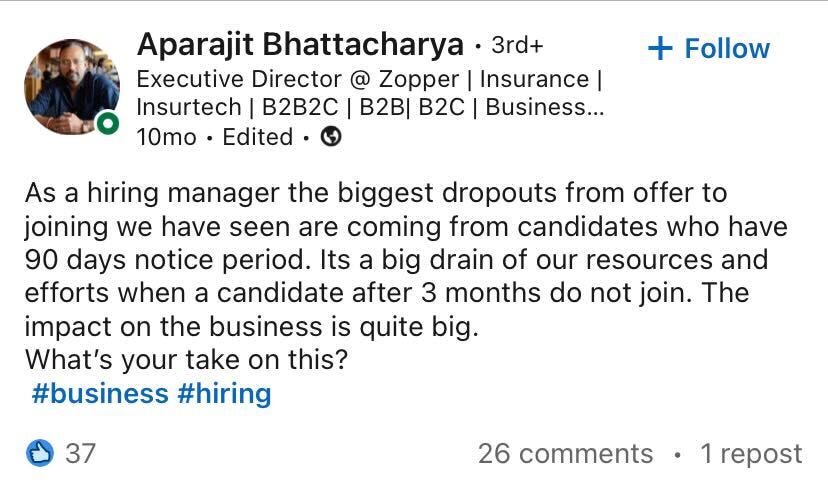
Recruiters face several hurdles at the POFU (Post Offer Fit Up) stage. First, there's the challenge of counteroffers. Candidates with strong performance might entice their current employer to match or even surpass your offer, sometimes with faster career progression. Second, ghosting can happen if the recruiter hasn't built rapport with the candidate or truly understood their interest in the role. Another hurdle is candidate hesitation. Uncertainty about company culture, future vision, or even the role itself can cause them to develop cold feet. Finally, a lengthy notice period (over 2 months) gives candidates more time to consider and potentially accept other offers.
How can recruiters use POFU data to improve their overall recruitment process and identify areas for improvement?
POFU data can be a goldmine for recruiters looking to improve their hiring process. Here's how:
See where you're losing talent: Track where candidates drop off during interviews. Maybe it's a long wait or a confusing application. This data helps you fix those leaks.
Craft better offers: POFU data reveals why candidates reject offers. Did someone offer more? Was the role unclear? Use this intel to make your offers more attractive.
Onboard smoothly: Identify snags in the onboarding process. Are new hires waiting for tools or feeling lost? Fix these issues for a happier (and more productive) new team member.
How can recruiters best leverage POFU to improve the candidate experience?
Landing a great candidate is just the first step! Here's how POFU can help you ensure they have a fantastic experience:
Stay connected: Regular check-ins keep your new hire informed and excited about joining the team.
Set them up for success: Be clear about what to expect during onboarding, so they feel prepared and ready to hit the ground running.
Make them feel valued: Show them you care about their experience by addressing their questions and concerns promptly.
Open communication is key: Be transparent about company culture, the team, and the role itself. This builds trust and avoids surprises.
Get them started early: Share relevant information and resources before their first day. This creates a sense of belonging and reduces anxiety.
Listen and learn: Encourage feedback throughout the process. Use their insights to make POFU even better for future hires.
What metrics or KPIs do you recommend tracking to measure the success of a POFU program?
Here's a breakdown of key metrics to track your POFU program's success:
Wins vs. Drops: This combines Offer Acceptance Rate and Offer Drop-off Ratio. See how many candidates who accept actually join (wins) vs those who don't (drops).
New Hire Retention: Track how many new hires stay with the company after a specific period (e.g., 3 months, 1 year). This shows the long-term impact of your POFU efforts.
Candidate Satisfaction: Surveys or feedback forms give you valuable insights into the candidate experience during POFU. Use this to identify areas for improvement.
Cost per Hire: Track expenses associated with POFU (e.g., onboarding materials, background checks). This helps you understand the program's efficiency.
Remember, it's not just about getting someone to say "yes" initially. You want them to be excited to join and stay for the long haul.
Don’t leave us yet!
MetaMorph isn't your typical HR firm. We're a 360° HR Advisory firm dedicated to helping startups scale, evolve, and grow. We’ve helped more than 220 startups and multiple hires (and counting), providing them with the platform and opportunities they deserve.
We look forward to bringing you more exciting initiatives aimed at building a stronger and more inclusive tech ecosystem. Stay tuned for future events and updates through our newsletter and by following us on social media.
Thank you for being a part of the MetaMorph journey!